Richmond Park wedding flowers suppliers and ideas
Posted on 09/10/2026
Planning wedding flowers around Richmond Park can feel wonderfully exciting and slightly overwhelming at the same time. You want blooms that look elegant in photographs, suit the season, work with the venue or ceremony style, and still feel like you. That is exactly where Richmond Park wedding flowers suppliers and ideas become useful: they help you narrow choices, avoid costly mistakes, and build a floral look that feels natural in this beautiful corner of South West London.
Richmond Park has a very specific kind of charm. It is green, open, softly grand, and full of changing light. That means flowers for a wedding nearby need to do more than just look pretty in a vase. They should hold up in transit, complement the setting, and make sense for the time of year. Below, you will find a practical guide to choosing suppliers, shaping your floral style, and planning arrangements that actually work on the day. No fluff. Just the useful stuff.

Table of Contents
- Why Richmond Park wedding flowers suppliers and ideas Matters
- How Richmond Park wedding flowers suppliers and ideas Works
- Key Benefits and Practical Advantages
- Who This Is For and When It Makes Sense
- Step-by-Step Guidance
- Expert Tips for Better Results
- Common Mistakes to Avoid
- Tools, Resources and Recommendations
- Law, Compliance, Standards, or Best Practice
- Options, Methods, or Comparison Table
- Case Study or Real-World Example
- Practical Checklist
- Conclusion
- Frequently Asked Questions
Why Richmond Park wedding flowers suppliers and ideas Matters
Flowers do a lot of heavy lifting at a wedding. They set the tone before guests even sit down. They tell people whether the day will feel formal, relaxed, romantic, wild, modern, or somewhere in between. Around Richmond Park, that matters even more because the setting already brings a strong visual identity. The park's open landscape, mature trees, and seasonal colour can either work with your flowers or quietly fight them. Better to choose with intent.
Suppliers matter too. A wedding florist is not just someone who makes a bouquet. The right supplier helps you translate a mood into actual arrangements, then makes sure everything is delivered on time, looked after properly, and placed where it should be. That sounds obvious, but on a wedding morning, logistics are everything. A beautiful design that arrives late is not much use. Harsh, but true.
There is also a budget angle. Wedding flowers can be one of those areas where spending is easy to underestimate. By thinking about Richmond Park wedding flowers suppliers and ideas early, you can decide where to invest, where to simplify, and where a little restraint will still look elegant. A smaller number of well-chosen arrangements often looks more polished than a room full of random extras.
Expert summary: the best Richmond Park wedding flowers are the ones that suit the season, suit the venue, and suit how you want the day to feel. Not necessarily the biggest. Not necessarily the trendiest. Just the right fit.
How Richmond Park wedding flowers suppliers and ideas Works
In practical terms, the process usually starts with a style conversation, then moves into a quote, a design plan, and finally the delivery and setup. If you are working with a florist near Richmond upon Thames, they may already have a feel for local venues, parking realities, access timings, and how quickly flowers need to be moved once they leave the studio. Those are the small details that save stress later.
Most couples begin with the big pieces: bridal bouquet, bridesmaid bouquets, buttonholes, ceremony flowers, and table arrangements. From there, they decide whether they want a cohesive look across the whole day or different floral moments for ceremony, reception, and photo areas. Truth be told, many weddings benefit from a focused plan rather than trying to flower every surface.
The ideas side is where things get fun. Richmond Park works beautifully with romantic whites, greens, muted blush tones, soft lilacs, deep seasonal reds, and garden-inspired mixed arrangements. A florist can also adapt ideas to more contemporary styles, such as sculptural orchids, monochrome palettes, or loosely gathered meadow bouquets. It depends on the mood you are after. And yes, it is perfectly fine to say, "I know what I do not want, but I'm not sure what I do want yet." That is a very normal place to begin.
When comparing suppliers, look at more than just pretty pictures. Ask about:
- seasonal availability of blooms
- delivery and set-up options
- whether the florist creates custom designs or mostly ready-made styles
- experience with weddings in the Richmond area
- how they handle substitutes if a flower is unavailable
That last point matters more than people realise. Flowers are living product, not printed material. Sometimes the exact rose or peony you hoped for simply is not in the right condition. A good florist will guide you to a smart alternative without derailing the look.
Key Benefits and Practical Advantages
Choosing the right flowers and supplier gives you more than visual beauty. It gives you confidence. And on a wedding day, confidence is worth a lot.
- Better cohesion: your bouquet, ceremony flowers, and reception decor all speak the same visual language.
- Less stress: a clear plan means fewer last-minute decisions, fewer surprises, and fewer "wait, where does this go?" moments.
- Stronger photos: flowers frame faces, soften spaces, and add depth to images without overpowering them.
- Seasonal logic: choosing flowers that suit the time of year usually improves freshness and can make the budget work harder.
- Venue fit: Richmond Park-inspired styles often work best when arrangements are airy, natural, and not too heavy.
- Personal expression: the right flowers quietly show who you are, whether that means classic roses, loose garden blooms, or a more modern mix.
There is also a subtle practical advantage: good floristry helps a space feel finished without needing too many extras. You might think you need endless decor, but often a well-designed ceremony arrangement, a handful of table pieces, and one strong bouquet do the job beautifully. That is the kind of quiet efficiency couples appreciate once the day arrives.
If you are looking for a place to start with wedding-specific inspiration, the wedding flowers in Richmond upon Thames page is a helpful starting point for seeing what a local florist can offer.
Who This Is For and When It Makes Sense
This kind of planning is ideal for couples marrying near Richmond Park, in nearby Richmond upon Thames, or at a venue where the surrounding landscape is part of the experience. It is especially useful if you want flowers that feel elegant rather than overdone.
You may need this if:
- you are planning a ceremony close to Richmond Park and want the flowers to reflect the setting
- you care about seasonal flowers and want realistic guidance rather than a dreamy but impossible shopping list
- you need a florist who can help with bridal bouquets, bridesmaid bouquets, buttonholes, and table arrangements together
- you are comparing suppliers and want to understand what separates a decent quote from a genuinely useful one
- you want flowers that look good in both soft daylight and indoor reception lighting
It also makes sense if you are not a "flower person" in the traditional sense. Some couples are extremely specific. Others just know they want something tasteful, not too fussy, and not wildly expensive. Both are fine. You do not need to become a florist overnight. A good supplier should make decisions easier, not more complicated.
Step-by-Step Guidance
1. Start with the setting
Begin by thinking about the venue and the feel of the day. Richmond Park-adjacent weddings often work well with natural textures, light colour palettes, and arrangements that do not fight the surroundings. If the space already has strong character, your flowers should support it, not shout over it.
2. Choose a style direction
Pick one clear direction first. For example: classic white and green, soft romantic pastels, seasonal garden blooms, or a rich autumn palette. It is much easier to refine a style than to build one from fragments. A mood board can help, even if it is a messy one with screenshots and a coffee stain. Honestly, that still counts.
3. Decide your priorities
Make a short list of what matters most. Some couples prioritise the bridal bouquet. Others care most about ceremony flowers or table arrangements. If the budget is tight, this step is vital. Put the strongest visual impact where guests will notice it most.
4. Ask the right supplier questions
Before booking, ask about flower availability, delivery timing, set-up, and what happens if a bloom is unavailable. Ask whether the florist can work from photos, sketches, or a short brief. You do not need to sound like a professional planner. Simple, direct questions are usually the best kind.
5. Confirm quantities and placement
Work out exactly where each arrangement goes. Ceremony? Entrance? Top table? Guest tables? Registrar's table? A rushed list at the last minute is where misunderstandings creep in. A little structure now saves a lot of fixing later.
6. Lock in the timeline
Florists need lead time, especially in busy wedding months. Speak early if possible. Finalise details when asked. If the schedule changes, tell the supplier promptly. It sounds basic, but the wedding world runs on timings and tiny windows. A bouquet cannot be in two places at once.
7. Plan for the day itself
Make sure someone knows who is receiving the flowers, where they should be delivered, and who is responsible for moving pieces after the ceremony. If no one is assigned, things drift. That's just life.
Expert Tips for Better Results
Some of the best wedding flowers are not the most expensive ones. They are the ones chosen with restraint and placed with care.
First tip: think in layers. Your bouquet should make sense on its own, but it should also belong to the wider floral story. If your bouquet is airy and loose while the table flowers are formal and dense, the overall effect can feel disconnected.
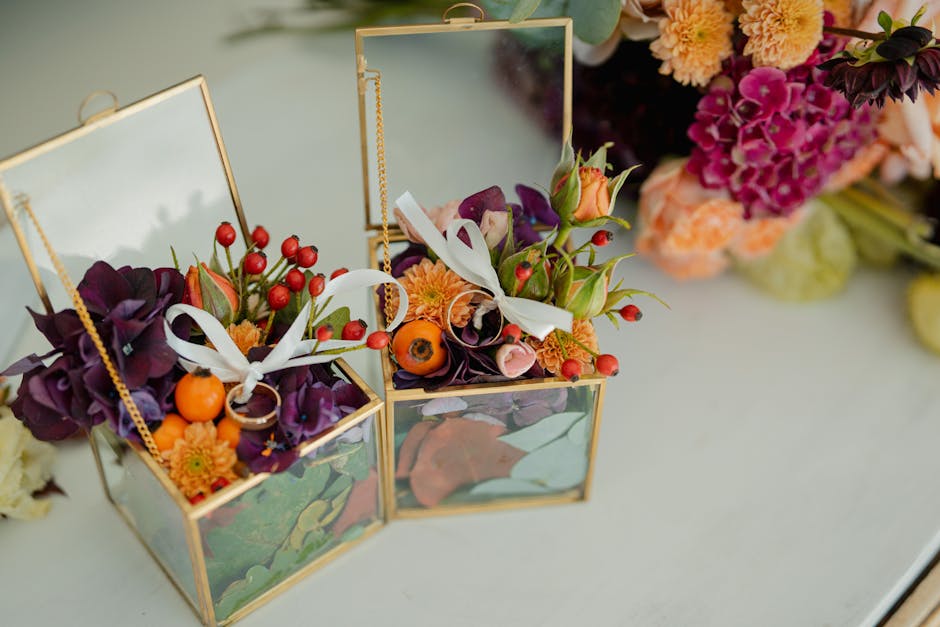
Second tip: use seasonality to your advantage. Seasonal blooms often look more natural and bring a more convincing sense of place. In spring, think light and fresh. In summer, the options broaden. In autumn, richer tones and textured foliage can look especially good near Richmond Park's trees and changing light.
Third tip: do not overload the brief. A supplier can work wonders with clarity, but too many conflicting references can muddy the result. "Romantic, light, and elegant" is far more helpful than "I love peonies, but also tropical, but also very minimal, but also glamorous." That one gets everyone nowhere fast.
Fourth tip: remember the photography. Flowers that look beautiful up close should still read well in group shots and wider venue photos. Large blooms, strong shapes, and thoughtful colour balance tend to hold up better than overly tiny detail alone.
Fifth tip: consider scent carefully. Strongly scented flowers can be lovely, but they are not always ideal for every setting. Some guests adore fragrance; others are less keen, especially in enclosed spaces. A balanced approach is usually safer.
Sixth tip: build in one signature floral moment. It could be a statement bouquet, a beautiful ceremony meadow, or elegant table arrangements. One memorable feature often does more than spreading the budget too thinly. To be fair, that is true of many wedding decisions.
Common Mistakes to Avoid
- Choosing flowers without checking seasonality: if a bloom is out of season, it may cost more or need replacing.
- Ignoring venue scale: a small room can be overwhelmed by oversized arrangements, while a larger space can make tiny florals disappear.
- Booking too late: good wedding florists can be busy, especially during popular spring and summer weekends.
- Underestimating logistics: access, parking, unloading, and timing all matter more than people expect.
- Mixing too many styles: when everything is competing, nothing stands out.
- Forgetting buttonholes and smaller pieces: these details are easy to leave until later, then suddenly everyone remembers.
- Not deciding who keeps the flowers after the event: if no one has the job, arrangements can be left behind or wasted.
One more thing: do not assume "wedding flowers" means only bouquets and centrepieces. Small pieces can have a big effect, especially when they repeat the same colours and textures across the day. A single buttonhole that echoes the bridal bouquet can quietly pull everything together.
Tools, Resources and Recommendations
There are a few simple tools that make wedding flower planning much easier. You do not need fancy software. In most cases, a shared notes app, a folder of pictures, and a spreadsheet are more than enough.
- A mood board: save images that show shape, colour, and overall feeling rather than exact flowers only.
- A guest and table plan: useful for estimating how many table arrangements you might need.
- A budget sheet: keep flowers in context with the rest of the wedding spend.
- A timing checklist: useful for confirming delivery windows and set-up times.
- Sample product pages: these help you understand a florist's style and naming conventions.
If you are browsing a florist's wider range, it can help to compare wedding items with general bouquet styles. For example, a classic white bridal look may sit nicely alongside selections like white flowers, while a warmer celebration might lean toward mixed colours or even a more dramatic, seasonal palette. For couples wanting a more developed wedding collection, pages such as weddings, wedding bridal bouquets, and wedding table arrangements can be useful reference points.
It is also worth looking at bouquet and style names to get a feel for a florist's creative tone. Collections such as I Cherish You, White Wonders, and Pure Romance can hint at how formal, soft, or contemporary the overall approach might be.
Law, Compliance, Standards, or Best Practice
For wedding flowers, there are usually no special legal hurdles for couples themselves, but there are still sensible best-practice points to keep in mind. Florists need to operate safely, communicate clearly, and deliver what has been agreed as closely as practical. You should expect transparent pricing, clear product descriptions, and a straightforward understanding of delivery terms.
If your venue has its own rules on access, placement, candles, water, or installation timing, those should be followed carefully. This is especially relevant in London venues where loading access, unloading times, and venue staff coordination can be tight. A florist familiar with local work will usually ask the right questions early.
Best practice also means being realistic about substitutions. In the UK flower trade, natural variation is normal. Colour tone, stem length, bloom size, and exact variety may change according to season and supply. A well-run florist will explain this clearly rather than pretending every stem is identical. That honesty builds trust.
For your own peace of mind, keep written confirmation of the agreed design, delivery time, location, and any special requests. Nothing dramatic. Just a tidy record so that everyone is on the same page.
Options, Methods, or Comparison Table
Different weddings need different flower strategies. The right choice depends on budget, style, and how much impact you want from each part of the day.
| Approach | Best For | Strengths | Trade-Offs |
|---|---|---|---|
| Bridal bouquet-led | Couples who want one standout floral focus | Simple, elegant, cost-aware, easy to coordinate | Less visible impact elsewhere unless matched carefully |
| Full wedding collection | Couples wanting a coordinated look across the day | Strong consistency, polished photos, complete styling | Higher cost and more moving parts |
| Venue-focused design | Weddings where the ceremony or reception space does most of the work | Creates atmosphere, works beautifully in photos, can feel immersive | Needs careful planning to avoid over-filling the room |
| Minimal accent florals | Smaller weddings or tighter budgets | Affordable, neat, low stress, still attractive | Less dramatic unless colour and placement are chosen well |
If you are unsure which route to choose, start by asking one simple question: where will guests notice flowers most? That answer usually points you in the right direction.
Case Study or Real-World Example
Consider a couple planning a spring wedding near Richmond Park. They wanted the day to feel soft, relaxed, and elegant, with a slight garden-party feel rather than a formal ballroom style. Their first instinct was to add flowers everywhere, which is understandable. Everybody does that for a moment. Then they stepped back and refined the plan.
Instead of spreading the budget thinly, they chose a statement bridal bouquet, smaller but matching bridesmaid bouquets, understated buttonholes, and simple table arrangements with lots of greenery and a few focal blooms. Ceremony flowers were arranged so they framed the couple without blocking guests' sightlines. The result was calm, coordinated, and felt very natural in the setting.
What made it work was not extravagance. It was editing. The colour palette stayed tight, the blooms suited the season, and the arrangements were sized to the venue. Guests noticed the flowers, but they did not compete with them. That's usually the sweet spot.
They also asked the florist to prepare an easy handover plan for the day, which meant no one was wandering around looking for where the bouquet should go. Small thing, big relief.
Practical Checklist
- Decide on your overall floral style early
- Confirm the venue name, access details, and timing
- Set a realistic flower budget before requesting proposals
- Choose the priority pieces: bouquet, bridesmaids, buttonholes, ceremony, tables
- Check which blooms are in season for your date
- Ask about substitutions and delivery arrangements
- Confirm colours, sizes, and quantities in writing
- Share venue restrictions or instructions with the florist
- Assign someone to receive and place the flowers on the day
- Make a plan for repurposing flowers after the ceremony if needed
If you can tick off those items, you are already ahead of a lot of wedding planning chaos. And yes, there is always a little chaos. That is part of the charm, apparently.
Get a free quote today and see how much you can save.
Conclusion
Richmond Park wedding flowers suppliers and ideas are about more than decoration. They are about shaping the atmosphere of the day, helping your venue feel intentional, and making sure your flowers look as good in real life as they do in your imagination. The best results usually come from simple, smart choices: seasonal blooms, clear priorities, and a supplier who understands local logistics as well as design.
If you keep the setting in mind, stay honest about budget, and choose a florist who listens properly, you will end up with flowers that feel calm, elegant, and beautifully suited to Richmond Park's landscape. Not overworked. Not fussy. Just right.
And that, in the end, is what most couples are really after: a wedding that feels like their own, with flowers that quietly make the whole day sing.
Frequently Asked Questions
What flowers work best for a Richmond Park wedding?
Flowers that suit the season and the natural setting usually work best. Soft whites, greens, blush tones, and garden-style mixed blooms often look especially good near Richmond Park because they feel fresh and not too heavy.
How far in advance should I book a wedding florist?
It is sensible to book as early as you can, especially for popular spring and summer dates. Some couples start enquiries many months ahead so they can secure a florist whose style matches the wedding.
Can I get wedding flowers on a smaller budget?
Yes. A smaller budget can still create a lovely result if you focus on the most visible pieces first, such as the bridal bouquet, buttonholes, and a few key arrangements. Editing the scope often helps more than cutting quality.
Should I choose seasonal flowers for a wedding near Richmond Park?
Usually, yes. Seasonal flowers tend to look more natural, may be easier to source, and often give you better value. They also help the arrangements feel more in tune with the time of year.
What should I ask a wedding flower supplier before booking?
Ask about style, availability, delivery, set-up, substitutions, and whether they can work within your venue's access timings. It is also useful to ask for examples of wedding work rather than just general bouquets.
Do I need ceremony flowers and reception flowers to match?
Not exactly. They should feel connected, but they do not need to be identical. A cohesive colour palette or repeated flower type is often enough to create a strong overall look.
What if my favourite flowers are out of season?
A good florist can usually suggest a suitable alternative with a similar shape, colour, or mood. Sometimes the substitute ends up looking even better in the final design. Annoying, but true.
Are table arrangements necessary for a wedding?
Not always. It depends on the venue, the table layout, and the look you want. Some weddings only need a few simple centrepieces, while others benefit from fuller arrangements or a more minimal approach.
How do I make sure the flowers suit Richmond Park itself?
Think natural, elegant, and well balanced. Because the surrounding landscape is already beautiful, flowers usually work best when they complement the environment rather than compete with it.
Can a florist help with bouquets, buttonholes, and centrepieces together?
Yes, and that is often the easiest route. A single supplier can coordinate the colours and style across the whole day so everything feels consistent.
What is the biggest mistake couples make with wedding flowers?
One of the biggest mistakes is trying to include too much. When the brief becomes overloaded, the result can feel scattered. A tighter, clearer plan usually looks more polished and is easier to manage.
How do I know if a florist is right for my wedding?
Look for clear communication, practical guidance, and a style that fits what you want. If the florist listens well and can explain how the flowers will work on the day, that is a very good sign.